
Instructions not Included When it Comes to Caregiving: By Dr. De Leon.
Instructions not Included When it Comes to Caregiving: By Dr. De Leon
Don’t dwell on the disease. Value the moments, the pearls of wisdom, their smile, their humor.” St. Elizabeth
 Caregiving is not for the faint of heart. I have had to be the caregiver for two of the people I love, my grandmother and father. Although the experience was extremely rewarding, I was left completely emotionally and physically spent when it was all said and done. Being a caregiver requires inner fortitude, perseverance and above all a great deal of love. Love for that person you are providing care for is the only thing at times that drives you and keeps you from losing your wits. In dealing with my loved ones as a caregiver, I had my moments of frustration as many of you have in taking care of your own loved ones who suffer from chronic illnesses like PD. The problems usually arise from thinking we know what is best for them which may be in opposition of what they think is best for them. Just because they are physically handicapped this does not mean they are mentally handicapped hence conflict ensues. This is entirely different when taking care of someone whose faculties have diminished as in those with dementia, we must then be the voice of reason. But when someone is still able to make decisions although in our opinion are not the wisest we have to find compromise to respect their wishes, keep their dignity, and maintain their safety.
So how do you decide when to step in and when to watch from the side lines (cautiously holding your breath)?
This question is extremely complicated of when to override their needs and desires for safety sake?
For example, my dad was very frail and getting extremely weak in addition he had fallen twice; yet, he insisted in continuing to use a walker instead of wheel chair. This entire scenario only made me cringe expecting to hear the sound of broken bones at a moment’s notice. Despite my better judgment as a doctor, I had to respect his wishes.
It is important not to fall into a trap as a caregiver of assuming what the person with PD needs. It is best to ask your loved ones their wishes. An honest and frequent dialogue can go a long way in maintaining the personal dignity of the care recipient or patient as well as that of the care partner who will not come across as a tyrant but rather as a truly caring individual.
So here are some tips I learned in providing care:
Learn to compromise– avoid disputes and old issues from getting in the way! During chronic illness especially as a loved one reaches end of life; this is the time to stick together! So as to make him or her feel like he/she still has some independence … instead of forcing the wheelchair in the case of my dad, I explained my concern for him of falling again and breaking a hip and ending in the hospital. Then let them decide based on the information.
Learn to reiterate your concerns in a compassionate manner – I explained to him that we had been lucky until now not to have broken any bones. But, as his bones were extremely frail and he was very weak any small insignificant injury even a simple bump from sliding off the bed could result in a hip or wrist fracture. However, if he did not wish to use the wheelchair, then we had to device another plan to maintain his safety. He agreed with this, he was then instructed to call someone first prior to getting up either from bed or sitting to alert them of his intentions of wanting to be mobile. He then was to sit at side of bed if reclining for few minutes rather than jumping up from laying (although this was emphasized more for theoretically purposes just so that he would remember to take it easy because in all honesty he could not jump anywhere when movements were extremely slow, deliberate and laborious). These recommendations can be used for anyone with mobility issues especially if getting orthostatic, dizzy and at risk of falling. I instructed him on appropriate safe use of walker and asked for him to carry safety belt around so if he did slip it would be easier for me or my mom to catch or lift him up.
Learn to coordinate: some of us are better at this than others. If you are good at delegating and seeing the big picture- this is your calling. Nothing is more important than having a game plan! For instance, I am good at this … While my mom tends to the daily needs of my dad, I can step back and see what needs to be done so I can guide my mother and assist her in getting things done. For instance dealing with matters of insurance, are documents in place? Are Wills done? Over see funeral arrangements if dealing with end stage disease? Are other legal documents in order? Because, as we know when we are dealing with the task of caring for someone 24/7, we can become so overwhelmed we sometimes can’t see the trees for the forest. This is especially the case when death is imminent, or contemplating placing loved one in a nursing home. Sometimes our judgment can become clouded and we may become paralyzed with grief! Be the one that initiates conversation and steers it in a positive direction to get things done.
Learn to facilitate: emotions tend to run ramped when dealing with a chronically ill loved one. At times, it is hard to step outside your situation and see things objectively. This is when a friend, pastor, social worker, healthcare professional or in my case a relative that does not live there all the time comes in handy. They can help provide valuable insight into the situation, give impartial advice to diffuse a stressful situation by offering prayer and even referring to other counseling services, support groups and other resources on line and to other community organizations that may be able to assist with specific needs. (I.e. help find a sitter/respite care). When I was caring for my grandmother who had end stage Parkinson’s she would at times get very belligerent and accuse me of holding her hostage since she was bed bound. Being a neurologist, I knew this was part of her illness I knew how to treat and did not bother me. However, when I was at the office and at the hospital having to deal with PD patients all day who were hallucinating and belligerent then come home to same scenario sometimes was a bit overwhelming. It was nice to have friends to talk to and even place her in respite care for a week so that I could decompress. Learn to listen: this is the most difficult task of all! Some of us hear but don’t really LISTEN. Listening takes special skills, understanding, and putting oneself in the shoes of the person living with PD. When we are in a stressful situation we all desperately need to be heard so everyone talks but No one LISTENS! Often times no words need to be uttered to have truly listened and made the person you are caring for feel special, unburdened, understood and loved. A simple kiss, hug, brush of the hair or hand, and even smile can go a long way!
The same rules apply for the caregiver; find someone who is willing to listen to your story. This simple act can allow you as a caregiver an outlet to relieve your own stress and open the door of communication and a way for you to ask for assistance in the area of specific need.
Lastly, learn to socialize: again if you are a leader or a take charge kind of person or event planner, this would be right up your ally. After all, we are all social beings most of us even the shyest of us thrive when we are bonding with others either individually or as a group. Therefore, it is important to plan social outlets to get yourself the caregiver out of a routine. Planning social gatherings with and without the person you are proving care for will help to diminish the risk of depression, loneliness, feelings of helplessness, spiritual exhaustion which might lead to suicidal ideation in both patients and caregivers alike. The outings or get together will also help to remind those involved of their unique talents and gifts and bring closer together as a couple or family. One activity my grandmother always enjoyed was painting. So we would paint as a family. This was always fun and made us forget for a bit about the struggles we each faced on a daily basis. This is fairly cheap to buy paints, brushes and canvas at a place like Hobby Lobby. Now they even have coloring books for adults but even children’s coloring books are fun to do as a group. Help organize activities for family, individual etc. Put your imagination to work. Even if it means taking them out for an unexpected “ice cream” run, my dad loved this or whatever their favorite activity may be; in my dad’s case fishing (even if it’s just in bucket or fish tank because he got too sick to go outdoors fishing as he would have liked).
The Essential Garment Closures for any Parkinson’s Woman: By Maria De Leon
Livin’ life with my OLD friend -PARKINSON’S DISEASE! by Dr. De Leon
Livin’ life with my OLD friend -PARKINSON’S DISEASE! by Dr. De Leon

Who would have thought I get my favorite brain disease?
Now, I know it’s just no fun
when we’re shaking inside out
Crying!
Pleading!
trouble smelling
even tying my own shoes!
What a pain to be in pain!
Walking slow and getting cramps
please, someone point me to the loo
So much shaking
Trouble baking
(doing much of anything)
Makes me want to scream
Blame my awful brain disease
Parkinson’s, dear old friend
why have you turned on me
and left me with a funky brain disease?

Surviving the emergency room
Great advice from Sheryl…thanks for sharing

 By Sheryl Jedlinski
By the time my doctor sent me to the hospital emergency room (ER) for a chest x-ray and an evaluation, I had a persistent fever, a horrible cough, and was wheezing so badly it was audible without a stethoscope. This was after three days on a drug cocktail prescribed at an immediate care facility. The likelihood of being hospitalized was disconcerting, as we have all heard horror stories of people with Parkinson’s (PWP) not getting their meds on time and the cascading medical problems this creates. Knowing my husband would not leave my side was key to keeping my anxiety in check.
What I hadn’t considered is how the electronic medical record (EMR), intended to reduce potentially fatal errors, is only as good as the people inputting and retrieving the information. Though I told the person updating my EMR about having Parkinson’s, the next person who called…
View original post 325 more words
Cómo Mejor Aprovechar de su Visita con su Neurólogo /Especialista de Desórdenes de Movimiento :By Dr. De Leon
Cómo Mejor Aprovechar de su Visita con su Neurólogo /Especialista de Desórdenes de Movimiento :By Dr. De Leon
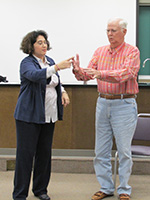
Se que muchos de ustedes han expresado su descontento y frustración con sus visitas con sus especialistas porque comúnmente sus preguntas de mayor urgencia no son contestadas a su satisfacción ó con la rapidez adecuada. Esto es difícil especialmente para nosotros los que vivimos lejos de nuestros especialistas. No podemos hacer los viajes con la frecuencia que nos gustaría por falta de recursos, transportación, tiempo y salud.
Algunos de nosotros aunque quisiéramos ir más a menudo las distancias son tan grandes separadas no solo por geografía y fronteras sino hasta continentes. Cuando yo trabajaba en el centro médico de Baylor en Houston la mayoría de los pacientes de habla Hispana procedían de otros países. Así es que para lograr una visita viniendo de tan lejos hay que estar bien preparado sobre los temas más importantes que desea hablar con su doctor. Porque al tiempo que se llega la cita aveces por la frustración y dolor físico que sentimos no solo por el viaje pero también sino por la espera en la sala de consulta cuando nos han pedido no tomar la medicina antes de la consulta.
Aquí les doy unas sugerencias basadas en mi experiencia como médico del Mal del Parkinson y paciente del mismo con el próposito de hacer que sus visitas sean del maximo beneficio.
En primer lugar, todas las veces posible lleven a alguien que sea sus oídos maximo cuando se trata de la primera visita con el especialista al menos que usted tenga experiencia y familiaridad con los términos médicos Especialmente si su neurólogo no habla el mismo idioma con mayor razón lleva a alguien fluyente en el idioma para que no se pierda la información en la traducción.
Les garantizo que con los nervios y cansancio, aun más cuando se enfrenta uno a recibir el diagnóstico por primera vez la información parece esfumarse como el vapor. Su acompañante le servirá para hacer punte a lo que se le es recomendado.
Aveces nosotros los médicos desafortunadamente ponemos más atención y cuidado a los síntomas visuales y no tanto a las invisibles como son la mayoría de los síntomas no-motores del Parkinson. Al menos que usted enfatice estos problemas y como le distraen en su vida cotidiana su especialista podra darle la atencion merecida.
La enfermedad del Mal del Parkinsons es una enfermedad extremadamente compleja y cada día parece aumentar su complejidad. Aun cuando los especialistas de desórdenes de movimiento pasan mas de una hora con el paciente es imposible llegar al punto de todos los síntomas y problemas que cada uno de nosotros combatimos diariamente.
Por eso es muy importante que antes de la visita ponga prioridad a lo que va a discutir con el especialista.
a) Acaso está ahí por primera vez como nuevo paciente para recibir un diagnóstico y tratamiento?
b) Acaso está ahí como nuevo paciente buscando una segunda opinión y alterar su tratamiento?
c) Acaso está ahí como paciente nuevo ó ya es paciente establecido buscando opinión para obtener cirugías? Dependiendo de la distancia de su especialista ó parte del mundo donde usted habite no todos los tipos de cirugía son recomendados. Por ejemplo cuando yo trabajaba en el centro médico de Baylor la gran mayoría de los pacientes Hispanos solo eran recomendados proceder con cirugías más antiguas como el Pallidotomy, Thallamoty, y a muy pocos se les sugería tartar la estimulación cerebral profunda ( en inglés por sus siclas DBS). La razón de esto porque había pocos programadores internacionalmente aunque el número de especialistas y programadores ha aumentado en los últimos años todavía hay muchos lugares incluso aquí en los Estados Unidos que no existen estos recursos. Esta seria una buena oportunidad para discutir sobre studios en ultrasonido enfocado. ( Focus US)
También quiero hacer nota de que aquí en los Estados Unidos a la gran mayoría de pacientes Hispanos por alguna razón no se les ofrecen los mismos servicios que a otros pacientes aún cuando ven a los mismos especialistas que los demás. Por eso es importante uno mismo preguntar si podría considerarse estos tratamientos que han sido de gran beneficio para muchos pacientes al rededor del mundo por más de 15 años.
d) Acaso está ahí buscando Incapacidad ya sea paciente nuevo ó establecido?
e) Acaso está interesado en participar en estudios científicos – le gustaría tratar nuevos tratamientos no aún probados vs. Tratamientos de medicinas ya aprobadas, ó tal vez ser parte de estudios invasivos vs. No invasivos?
Según su interés en la visita, esta va a requerir diferente atención y enfoque de parte de su especialista.
Limite su conversación a su razón por la visita una de las cinco ya mencionadas y dos cosas ó síntomas mas que requieren atención inmediata o son de gran propiedad.
Si acaso necesita discutir algunos otros problemas aparte de los tres principales no se espere hasta su próxima cita de 3 a 6 meses ponga una en menos tiempo; pero si no es posible por las distancias entonces pregúntele a su neurólogo si pueden continuar charlando por teléfono ó por medio del internet antes de su próxima cita para poder discutir sus preocupaciones principales.
Si acaso necesitan charlar sobre el pronostico o plan a largo tiempo hagan una cita exclusivamente para esto. Lleven a la familia allegada para discutir los planes futuros.
Si este es el propósito de su visita hágalo saber antes de la cita para que el doctor y los ayudantes médicos y todo el personal este preparado con datos, literatura y servicios auxiliares
como son los centro de rehabilitación ó lugares de asistencia pública.
En Segundo lugar, si viven en un país como los Estados Unidos estén al tanto de lo que su seguro de salud cubre concerniente a los medicamentos. Si viven fuera de este país muchos de los países tienen seguro social por lo que esto significa que todos los medicamentos tal vez no sea disponibles. De cualquier manera pidan ejemplares o muestra si las hay. También infórmense de servicios de asistencia con sus medicinas o cómo obtener el medicamento prescrito si no es disponible en su área geográfica.
Por tercer lugar, siempre que visiten sus doctores ya sean especialistas ó médico general carguen con todas sus medicinas aún las que compran sin receta porque es importante para su neurólogo saber si tendrá efectos relacionados a los otros medicamentos.
En cuarto lugar, pregunte en detalle cuales son los efectos secundarios y como informarle a su doctor si esto ocurre. Saber si los efectos son pasajeros ó podrian ser serios; también es importante saber el tiempo adecuado de que el nuevo tratamiento funcione y estar bien claro como añadir la nueva medicina al régimen que ya tienen; si solo tienen que añadir una mas ó tienen que lentamente disminuir una al tiempo que la otra sube?
Porque el genero de el paciente tiene mucho que ver con la terapia. Las mujeres si están todavía creando familia ó menstruando es esencial que se lo dejen saber a su especialista. Algunos de los tratamientos del Parkinson no pueden ser usados si están amamantando ó si piensan salir embarazadas. También es necesario estar al tanto de que algunas medicinas pueden causar ciertos riesgos como cierto tipo de cánceres como son la melanoma, el cáncer de mama, y el cáncer de la próstata.
Finalmente, especialmente común en este país es pagar por que sus papeles de beneficios de incapacidad ó algún otro documento que sea necesario tener firma del médico, además estos se pueden tardar unos días en estar listos. Si vienen de fuera es preferible enviar los papeles antes de la cita con la paga para que estén listos el día de su visita.
Si siguen estos consejos les garantizo que sus visitas seran de máximo beneficio y usted y su doctor trabajaran mejor en equipo con un mismo propósito-mantener su independencia y calidad de vida.
 defeatparkinsons