
The Theory of Everything : By Dr. De Leon.
The Theory of Everything : By Dr. De Leon


Recently I watched the movie “The Theory of Everything” in awe as so many of you must have. I was so delighted to see this film get nominated for so many awards and rightly so. The entire movie crew did a superb job bringing to light not only the life of this great mind of the 21st century but also poignantly detailing the conflicts that both a person with chronic neurological disease faces but more importantly the sacrifice, commitment and love required to care for someone in this position on a daily basis.
Many people have wondered and asked why Professor Hawking has been so fortunate to live to his present age, well into his 70’s, when most people with ALS typically live only on average of 2-5 years.
Some have attributed to the fact that he has a brilliant mind, others to having an atypical slower variant of the disease.
But, I say that the real reason perhaps has not much to do with the disease but with the extraordinary care that he receives.
This is a testament to the love and devotion of his care partners.
The thing that makes people with this illness succumb to the disease is the weakening of breathing and swallowing muscles which eventually compromise the person’s ability to oxygenate and to maintain nutrition causing a total collapse of the body. These are precisely the same reasons people with PD eventually die. However, if we provide support and assistance to allow someone to continue breathing artificially, the body and brain can continue to survive.
When I was in medical school the neurology department at Hahnemann University which is now Drexel University College of medicine had a large ALS facility. Patients there had been living with ALS like Mr. Hawking for decades.
We don’t often hear this because so few clinics exist like this and most ALS patients choose not to live completely locked in a nonfunctioning body. But perhaps we need to focus these patients’ attention on how someone can still have a prolific and meaningful life despite severe disability as long as there are willing care partners. This thought got me thinking about living with Parkinson’s disease. Although, some would claim that the severity of disease of PD cannot compare to that of ALS, yet as Parkinson’s progresses patients can also become trapped in their bodies. It is only through the unyielding care from the care partners that we as PD patients and those suffering from ALS can have a more meaningful existence.
However, this care can come at a price as was shown in the movie portraying the life of physicist extraordinaire. Divorce rates are much higher than general population in those suffering from chronic neurological disease. Love fades when the spouse is forced to be the care partner and sole provider. Caregivers should not go at it alone. It is a tremendous burden for anyone person to bear having someone else depend on them for All of their needs 24/7. Children do, but they eventually grow up and become independent. However a person living with chronic progressive illness the reverse is true- independence decreases as dependency increases. Worst of all is that this often happens as the spouse’s or partner’s strength begins to diminish and aging problems set in. It is honorable to want to take care of your loved one initially; but if not careful to take time to grow as a person independent of patient care a downfall is inevitable and love and loyalty can turn into frustration and resentment as we saw happening with Stephen’s wife after years of devotion.
To avoid marital pitfalls and continue the love that helps the patients’ thrive and aspire to continue fighting as well as having new goals and dreams despite their illness is to recruit others to help early on in the disease- it truly takes a village. So yes, we as Parkinson’s patients can continue to thrive well after disability has set in and our bodies no longer cooperate as long as we have someone preferably a team rooting for us, helping us get through hurdles of physical impediments willing to push us, lift us and feed us if necessary. Otherwise, we too like the majority of ALS patients who succumb to disease will wither away and call upon death much earlier than our potentials demand. By not allowing our destinies to be fulfilled, we may deprive the world of immeasurable hidden talent that only the PD patient possess which may manifest as the next masterpiece or brilliant insight which could lead to the next big discovery in the world of neuroscience. After all, as Stephen Hawking said: “where there is life there is hope.”
How To Make The Most Out of Your Neurology/MDS Visit: by Dr. De Leon
How To Make The Most Out of Your Neurology/MDS Visit: by Dr. De Leon
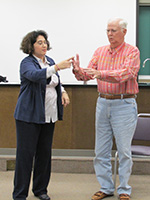


I know many of you have expressed the concern that some of the issues don’t get addressed or addressed in a timely manner when visiting your neurologist or MDS. This especially difficult to deal with since many do not live close to a neurologist and have to travel a way to go see them. So of course you are tired and frustrated of having to wait both to see a neurologist or movement disorder specialist as well as in pain and discomfort if asked by your doctor to be off your medications for evaluation.
We all have experience the feeling of disgust at ourselves when after leaving the doctor’s office after being there several hours we realized that we forgot to ask or discuss an issue that was utterly important.
A few tips to minimize frustration and maximize our time and neurologists focus on our issues are the following recommendations based on my extensive experience as a Parkinson’s specialist and as a patient.
First, I am sure many of you have experienced the phenomena I like to call the ‘doctor syndrome.’ For some reason, it happens to me all the time and I am certain it happens to you because many of my patients told me that they were worst before coming to see me. I am not sure why that is but my Parkinson’s symptoms are always better when I see my doctor!
Second, especially if it’s the first visit make sure if possible to bring someone with you that can be your ears. Because unless you are savvy in the medical field and medical jargon, after the first few sentences where your doctor tells you the diagnosis I guarantee you will not remember anything else said or explained.
As physicians we usually concentrate on what’s visually in front of us and have to pay close attention to non visible symptoms and rely on you unfortunately too much to let us know how your life is being affected by these invisible otherwise known as non-motor symptoms.
Parkinson’s disease is extremely complex illness and increasingly getting more as we speak even though most neurologists and movement disorder specialist like me typically spend an hour or more per patient it is impossible to cover ALL possible symptoms in detail.
Therefore it is imperative that you prioritize your problems:
- Are you there as a new patient and looking for diagnosis and new treatment?
- New patient for second opinion and alter treatment?
- Established patient for management of symptoms?
- Established or new looking for disability?
- Interested in participating in studies or research and what are you willing to do?-e.g. participate in studies with new unknown meds vs. known medications already approved, invasive vs. non-invasive?
All of these will require different focus from your doctor.
I recommend that you limit your discussion to main reason (chief complaint-e.g. new patient looking for diagnosis) you are there and two other symptoms that need immediate addressing!
If you have more pressing issues make an appointment sooner than what they will suggest don’t settle for appointment in 3-6 months if NOT doing well!
Also if need a family intervention to discuss prognosis and long-term treatment plan and care, make appointment with you, family and doctor exclusively to discuss these issues. Let the doctor know ahead of time that this is purpose for visit so doctor and staff can be prepared for meeting as far as time so you won’t be rushed and also and most importantly so doctor can formulate plan ahead of time and bring ancillary services if needed such as social services or names of assisted living, nursing home, or rehabilitation places etc.
Third, know your insurance coverage of medications. This will expedite treatment and allow doctors to know which prescriptions to write. Unfortunately, due to recent changes in healthcare and medication coverage (at least in this country) it is becoming increasingly more common for doctors particularly specialists to prescribe medications base on a patient’s formulary rather than what they think should be first choice! Ask for samples, ask for assistant programs, and let them know if meds will require pre-authorization or paper work filled out. If you are new patient or established patient who will be on new drug- it is best to not have that medication sent to mail order pharmacies until required dose achieved and / or know if can tolerate otherwise will get stuck with a bunch of medicine can’t use.
Fourth, always bring a list of your medications better yet the medications themselves which should ALWAYS include name of over the counter medicines even if they are as needed because could possibly interact with new prescription.
Fifth, ask for side effects of new meds, what to expect, how fast will notice improvement, do they need to be titrated and how often? In this should also inquire if meds will affect women issues such as safe if planning to conceive or are breastfeeding, ask especially if risk of melanoma, breast cancer and prostate cancer in family to be referred to specialist for follow-up given that some medicines will increase these risk and others like melanoma simply by having PD make you at higher risk.
Finally, at least in this country know that if you require paperwork filled out there most likely be a fee and a few days to get paper back so plan ahead.
Ask for literature, support groups, as well as ancillary services such as speech therapy if needed.
If you follow these simple rules, I guarantee that you will have a much happier and successful journey with PD as you and your doctor work as a team.
*******
Dr. M. De Leon is a movement disorder specialist on sabbatical, PPAC member and research advocate for PDF (Parkinson’s Disease Foundation); Texas State Assistant Director for PAN (Parkinson’s Action Network). You can learn more about her work at http://www.facebook.com/defeatparkinsons101 you can also learn more about Parkinson’s disease at www.pdf.org or at www.wemove.org; http://www.aan.org, http://www.defeatparkinsons.blogspot.com All materials here forth are property of Defeatparkinsons. without express written consent, these materials only may be used for viewers personal & non-commercial uses which do not harm the reputation of Defeatparkinsons organization or Dr. M. De Leon provided you do not remove any copyrights. To request permission to reproduce release of any part or whole of content, please contact me at deleonenterprises3@@yahoo.com contributor http://www.assisted-living-directory.com Contributor http://www.lavozbrazoriacounty.com
Parkinson’s Disease- Causes, Management, Treatment and Research
Excellent advice! Thanks for talking to neurologist and to Dr. diets for taking time to answer such important questions!
POLE Walking for Balance and Maintaining Mobility
These are great tips!

 Jayah Faye Paley polewalking
Jayah Faye Paley explains that “learning how to use poles enables you to navigate everyday obstacles as well as improve balance, endurance, walking gait, agility and posture. When polewalking, you feel taller and more confident! A profound freedom of movement is experienced – as if you have 4 legs.” Her list of other benefits includes:
Benefits of Poles for Walking, Exercise, Balance & Mobility
- Achieve, maintain, even regain mobility
- Use upper body muscles to improve strength and help preserve joints
- Reduce stress on knees, hips and spine
- Achieve a more even gait & reduce risk of falling
- Maintain & Restore spine function; improve bone density
- Enjoy the outdoors, connect with your buddies and get great exercise!
Jayah Faye Paley is a mobility coach, ACE & AFAA certified personal trainer and educator. She teaches for many organizations including State and National Parks, East Bay Regional Park District, Point Reyes…
View original post 165 more words
I wish someone had intervened…
Must always find the unique talents for each child and person so they can achieve greatness and fulfill their God given destiny.

 Above: Conventional school made this creative-creature very, very miserable.
Every time I read this story, I get a bit emotional…
Gillian was only eight years old, but her future was already at risk. Her schoolwork was a disaster, at least as far as her teachers were concerned. She turned in assignments late, her handwriting was terrible, and she tested poorly. Not only that, she was a disruption to the entire class, one minute fidgeting noisily, the next staring out of the window, forcing the teacher to stop the class to pull Gillian’s attention back, and the next doing something to disturb the other children around her. Gillian wasn’t particularly concerned about any of this – she was used to being corrected by authority figures and didn’t really see herself as a difficult child – but the school was very concerned. This came to a head when the school wrote to…
View original post 1,206 more words
Changing the Tides of PD Stigma from Whispers and Staring to Support and Caring! By Dr. De Leon
Tips for Getting Ready for Surgical Procedures When You have PD: By Dr. De Leon
“I had plastic surgery last week. I cut up all my credit cards.” Henry Youngman
As I get ready to undergo yet another diagnostic procedure I am reminded about the possible perils of navigating conscious sedation and anesthesia with PD.
One of the hardest things is being asked to stop your medication the night before a procedure. Depending on your stage of disease this can range from a mildly uncomfortable feeling that can be endured with little discomfort to a downright painful and excruciatingly difficult experience to tolerate that may seem never ending because of the withdrawal symptoms. Then there is the stress of having to undergo a medical procedure to really kick up the use of dopamine in your brain making your Parkinson’s symptoms seem that much worst.
Until I had PD myself I never truly understood how hard it was for patients to be asked to stop their medications. I knew it was not a good idea to make someone stiffer, shakier, have more trouble swallowing and breathing when undergoing general anesthesia. This is the time we want patients to be the strongest to not only make extubation easier but also decrease aspiration pneumonia around surgery and allow for faster recovery. So why would we want to stop all PD medications? Besides, we would not want increase in pain meds because they are off. When I am off my PD meds the biggest problem I experience is the severity of pain which is so severe it causes me to almost black out. Not a good feeling! Unfortunately, not all PD medications are compatible with anesthesia like MAO inhibitors so meds like Azilect do have to be stopped prior to surgery. And because aspiration and vomiting due to anesthesia need be minimized patients are asked to not eat, drink, or take medications.
But, sometimes surgeries can be delayed due to unforeseen problems as it happened to me with the last surgery. I was scheduled for surgery at 8 and did not actually go to OR until 1pm. So not only are you starving but the time without medication can be prolonged unexpectedly causing greater discomfort.
Things to do to avoid being caught in scenarios where you are stressed more than you have to.
1) If you take Sinemet ask for your physician to write an order for you to take Parcopa in its place throughout surgical procedure to avoid Gi tract. Since this is an orally disintegrating formulation fast acting? If surgery is delayed it can take another dose at your scheduled time. Of course if you are on IV pump this should be able to be continued unless they are working in area where pump is placed.
2) you can still continue with the dopamine patch agonist NEUPRO during surgery.
3) ask for scopolamine patch prior to survey to avoid nausea and upset stomach caused by anesthesia and being off your full regimen.
4) If being off or not eating for long time causes migraines again you can still receive treatment with orally disintegrating Triptans (e.g. Maxalt).
5) Try to be the first case of the morning.
6) If an elective procedure do when you are at your strongest and make sure your neurologist/MDS fine tunes your medications to ensure maximum outcome. Do not put yourself at an unnecessary risk for an elective procedure (non –life threatening or emergent). As I had to postpone my father in law’s surgery because his breathing was too weak and did not want risk of having trouble coming off the vent after surgery.
These tips should help you ease your discomfort as you prepare for surgical procedures.
____________________________________________________________________________
Dr. M. De Leon is a movement disorder specialist on sabbatical, PPAC member and research advocate for PDF (Parkinson’s Disease Foundation); Texas State Assistant Director for PAN (Parkinson’s Action Network). You can learn more about her work at http://www.facebook.com/defeatparkinsons101 you can also learn more about Parkinson’s disease at www.pdf.org or at www.wemove.org; http://www.aan.org, http://www.defeatparkinsons.blogspot.com All materials here forth are property of Defeatparkinsons. without express written consent, these materials only may be used for viewers personal & non-commercial uses which do not harm the reputation of Defeatparkinsons organization or Dr. M. De Leon provided you do not remove any copyrights. To request permission to reproduce release of any part or whole of content, please contact me at deleonenterprises3@@yahoo.com contributor http://www.assisted-living-directory.com Contributor http://www.lavozbrazoriacounty.com
 defeatparkinsons