What is Parkinson’s Disease? By Dr. De Leon

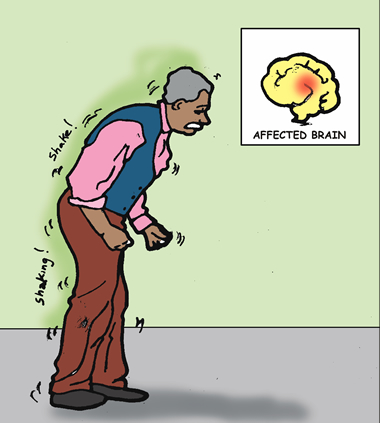
It has been nearly two centuries since the name of a famous English surgeon by the name of James Parkinson was assigned to a chronic neurological condition affecting nearly 10 million people worldwide known as Parkinson’s disease (PD).  For years Parkinson’s specialists have based their treatment of this progressive neurological disease on the clinical characteristics involving the 4 cardinal symptoms of PDtremors at rest, slowness of movement, stiffness in muscles, and gait abnormalities. However, as it turns out the movement abnormalities are just the tip of the iceberg. PD is a complex disorder in which there is no one typical face representing this malady since it can also affect mood causing depression and anxiety, impair memory, interfere with sleep, disrupt bowel and bladder function, as well as cause loss of smell.

Although, at present there is no blood test to make diagnosis a skilled movement disorder specialist (MDS) can make diagnosis confidentially 95 % of the time.

Parkinson’s disease can affect all walks of life’s and all socioeconomic status. There is no known cause for the disease in the majority of the patients hence the term idiopathic PD although about 10% do have a genetic abnormality. Some risk factors for disease development include age over 55, gender (slightly more men in older populations), race (Hispanics have twice as much risk as whites in developing PD), exposure to pesticides, early hysterectomy and family history of PD and tremors.

Therefore, anyone experiencing difficulty with several of these areas  such as trouble walking, balance problems, tremors, trouble writing particularly exhibiting small handwriting, having stiffness or slowness of muscle movement, drooling, trouble swallowing, constipation, muscle pain, muscle cramping, frequent urination, trouble seeing (depth perception problems especially at night), loss of smell, poor sleep could be experiencing Parkinson’s disease and should seek the advice of a neurologist/MDS.

Recognizing some of the early features of Parkinson’s disease is not only crucial but necessary to the overall improvement of quality of life by prolonging independence and productivity in society in those afflicted with this disease; but early treatment can also delay hospitalization and nursing home admittance.

With the advent of new treatment modalities which include new medications such as dopa agonists, surgical procedures like deep brain stimulation (DBS), as well as non-conventional therapies such as dance and art therapy quality of life in people with Parkinson’s disease has improved significantly in the past two decades.  In addition to these new modalities Sinemet (levodopa/carbidopa) still remains the gold standard of treatment of PD.

For more information on the subject go to www.pdf.org or PDF Helpline – 1800-457-6676

Tips for Treating Restless Legs Syndrome (RLS): By Dr. De Leon

Tips for Treating Restless Legs Syndrome (RLS): By Dr. De Leon.

Tips for Treating Restless Legs Syndrome (RLS): By Dr. De Leon


Restless Legs Syndrome (RLS) also known as Willis- Ekbom syndrome is described as a discomfort, creepy- crawly sensation, or an irresistible urge to move the legs arising from a profound feeling of ‘restlessness.’ These sensations only occur at rest and primarily at night. They are relieved by moving the legs and walking up and about. As the name implies they occur predominantly in the legs, however once treatment begins these abnormal sensations can spread to involve the arms due to augmentation. RLS occurs 2.5% to 15% in general population.

RLS can be familial (1/2 of the time, some have abnormality in chromosome 12) or secondary to another neurological or medical illness such as PD or pregnancy. RLS can occur for the first time in pregnancy and more common in the second and third trimester. The symptoms undergo spontaneous remission after delivery. It can occur at any age and slightly more common in women than men.

As we know RLS is often seen in advance PD as a result of ‘wearing off’ and low dopamine doses (but who is too say is not due to low levels of Vitamin D in these patients?); however there is still much debate whether the two are linked or simply coexist. The debate comes down to the fact that RLS is a disorder of relative iron deficiency while iron levels are found to be high in the substancia nigra from oxidative stress. So even though they share similar treatment they do not appear to share a common brain defect.

Despite the fact that many neurologists and sleep specialists have believe that RLS is more common in PD, there is no data to support this claim to date. Three studies conducted outside of the US have shown controversial findings thus far; two studies stating increase RLS in PD compared to controls while a third one showed the opposite.  Thus, uncertainty of risk of RLS in PD remains. Yet, if you suspect you have this go see an MDS because sleepless nights triggered by pacing the floor to relief symptoms is no life!

Causes:

Chronic diseases – Parkinson’s disease, diabetes, kidney failure, iron deficiency, vitamin D deficiency, folate deficiency (which happens to be one of the risk factors for PD).

Medications: some types such as nausea pills, anti-psychotics, some antidepressants, allergy medicines containing antihistamines can trigger these symptoms.

Pregnancy: In pregnancy the prevalence shoots up dramatically from 10% to 26%. This increase maybe due to an inherent iron and folate deficiency which are known risk factors for this condition.

Treatments:

Always TREAT UNDERLYING CONDITION FIRST!

  • Reduce alcohol
  • Exercise (especially yoga, tai- chi) 30- 60 minutes brisk walk or other type of exercise stretching and moving legs will improve symptoms and reduces night time fatigue, pain, restlessness, and help sleep better –this works best if followed by relaxation techniques like meditation.
  • Massage your lower legs or ask someone to rub /massage for you on a daily basis ( some of my patients would put soap in their socks or underneath the sheets so each time they moved essentially getting a massage- I think there are better ways) you can also get some massage boots at Wal- mart or other retail stores.
  • GET a Good night sleep – (sleep deprivation is a trigger)
  • Avoid sitting in one position for too long (same thing that makes us stiff with PD)
  • Medications- dopamine agonists – but I prefer as most movement disorder specialists a combined therapy plan to avoid augmentation and escalation of symptoms and increase drug dosage. Other medicines include Klonopin, Neurontin, Lyrica, Sinemet ( this is preferred treatment in pregnancy if symptoms are severe and iron and folate normal). Elderly patients with RLS should be ware of dopamine agonists especially advanced PD patients who may already be predisposed or have beginning of dementia.

Sources:

http://www.youngparkinsons.org/articles/restless-leg-syndrome-and-parkinsons-disease

Willis-EKbom Foundation

http://ghr.nlm.nih.gov/condition/restless-legs-syndrome

@copy right 2015 all right reserved Maria De Leon

A Few Things to Consider When Thinking About Giving Up Driving: By Dr. De Leon

A Few Things to Consider When Thinking About Giving Up Driving: By Dr. De Leon.

Tips to dealing with cramping toes: By Dr. De Leon

  • Purple Clover's photo.

It is extremely painful to have one little toe or worse all toes suddenly decide to have a mind of their own and begin to curl, twist and bend at their own free will. Believe me, I know. This type of pain can bring a grown man to their knees.

When I first began having symptoms of PD, I noticed that every time I arched my foot to put on my shoes especially if the shoes had a narrow circumference, the shaft was high  (e.g. boots),my toes along with my entire foot would curl up into an extremely painful contorted mess that could only be relieved by stoking deeply for several minutes. At first I thought I had cramps due to potassium deficiency since I was on diuretics (water pills) for my blood pressure. But, since they were potassium sparing of course this was not the case. Since I love shoes, this little problem was turning into a huge problem since I could no longer wear most of my shoes. Each time I attempted to wear high heels even medium heels my toes would automatically curl down. Because of the exaggerated angle in which the foot would have to be positioned  wearing these shoes not only was it difficult to put on but even more painful to wear often causing me to be off balance. Now, I was forced to make a drastic change to my wardrobe throwing away most of my shoes including all my favorites to prevent falling and pain.

For the first time in my life I was wearing tennis shoes all the time (extra wide) with little to no arch.

Although, cramping toes can be one of the initial presentation of Parkinson’s disease as it was for me it can also be a sign and symptom of many other possible conditions.

 In fact, cramping toes usually are a sign that medications are causing side effects ( as I alluded before especially in the elderly many of whom take water pills for heart problems), not working very well, and a first sign of Diabetes and other neuropathies (loss of nerve endings).  Yet, if you already have a neurologic illness such as PD or idiopathic dystonia, the presence of these are an indication of poor medication control.

What to do at first sign of cramping in toes/ legs /foot:

Go to PCP to make sure your electrolytes are okay like potassium, magnesium and calcium (have both your total calcium and ionized calcium).

1)
Toes cramping can also be a sign of diabetes, as I stated earlier. So your doctor may have you undergo a blood sugar tests especially if older or have risk factors like family history or repeated use of steroids. Usually they will order a 3- hour glucose test but others prefer a 5- hour test. This requires you drinking a nasty sugary orange drink while fasting while you have your blood drawn at baseline then every 1/2 hour to an hour for the duration of test.

2) There is a condition known as painful legs moving toe syndrome which also can cause this problem. This extremely rare, usually in adults. Pain is that of nerve burning, searing. This is associated with writhing movement of  one or more toes and can be in one foot or both. sometimes can have movement of toes without pain- “painless legs- moving toes

3) this can also occur in dystonia syndromes – focal idiopathic or secondary dystonia as seen with PD and other neurological disorders (e.g. Cerebral palsy, DRD, parkinsonism).

If all blood test initially are normal and symptoms persist seek opinion of a Movement disorder specialist (MDS).

If symptoms are determined to be neurological and due to PD as were mine then starting treatment with dopamine agonists or levodopa will dissipate the pain and stop the involuntary contraction of your toes. No longer was I bound to wearing tennis shoes all the time! Too bad I had already thrown half of my shoe collection away.

Now,
if are already a season PD patient and are now  having this problem: note time of onset and duration along with relation to medication intake. Does is it commence at end of dose, at peak dose, or beginning of medication? This is crucial to help your MDS best adjust your medications to stop your symptoms. If adjusting meds do not help Botox and even DBS can be done.


As an aside: Sometimes NEUPRO can cause cramps when patch wears off or if it falls off. I have noticed that suddenly I start cramping so I look for my patch to find out it has slipped due to humidity and sure enough it has most of the time.


4)
As I previously mentioned neuropathies can trigger these problems, make sure that if you are a PD person your doctor is checking your  B12  and Vitamin D because these deficiency are not only common in Parkinson’s but can cause neuropathy.


Treatments of Curling Toes: will depend largely on the cause but there are some symptomatic treatments. Finding the etiology is key to prevention and successful treatment.

  • Mustard- spoonful of mustard with water- carry some packets with you in case
  • (sour/dill) Pickle juice- when I first started having symptoms I became like all my patients with jars full of dried pickles in the refrigerator.
  • Tonic water (Gin & tonic maybe not so much) a glass or 2 a day-
  • No quinine- no longer used because potential for heart problems
  • B12 injections/ nasal spray/sublingual
  • B1- thiamine 100mg tablets daily- not enough to take multivitamins ( better to take B complex vitamins but may still need to take extra)
  • Neurontin ( or Lyrica)
  • Dopamine medications
  • Klonopin (other anxiolytics)
  • Baclofen ( other centrally acting muscle relaxants)
  • Botox injections for focal dystonia when meds not helping ( may also use other forms of botulinum e.g. disport, myobloc)
  • DBS
  • Sugar control (diet, exercise and medications)
  • Replace electrolytes- K, Mg, Ca
  • Replace Vitamin D
  • parathyroid/thyroid replacement

Great sources of Potassium:

  • Avocados (also rich in Magnesium)
  • Bananas ( Magnesium source as well)
  • Strawberries
  •  Popcorn

Great sources rich in Magnesium:

  • dark  leafy greens ( also have lots of B12 vitamin)
  • fish (mackerel)
  • nuts and seeds -(pumpkin seeds)
  • beans and lentils
  • dark chocolate ( my favorite)
  • non-fat yogurt

Tips & Tricks: Traveling with Parkinson’s Disease: By Dr. De Leon

Tips & Tricks: Traveling with Parkinson’s Disease: By Dr. De Leon.

Tips & Tricks: Traveling with Parkinson’s Disease: By Dr. De Leon

Spring break is fast approaching and many of us especially those of us with children look forward to this time of year to being able to travel as a family. Sometimes you even get to chaperone for fun on school excursions just as an excuse to see the world through their eyes! However, even though it now takes me longer to pack my medications than it does my actual clothes and toiletries, I still enjoy traveling whenever possible….( still have a million meds to pack- need a bigger bag just for this but could not do it with out my trusty world travel -diva bag!)
So, here a few tricks to make traveling a bit easier and not such an ordeal.
Of course, it takes more planning than it once did since traveling with PD is a lot more complex than if we did not have a chronic illness. Don’t be discouraged it can be done but don’t forget to keep in mind destination climate and time of year. We not only have to keep track of our meds but we also have to be conscientious of the temperature and other weather conditions in the areas of our destination because believe it or not extreme weather can make our symptoms worst as I am sure many of you already know.

General tips!

 Always carry a letter from your neurologist stating your diagnosis and medication list. This might avoid extra scrutiny or people thinking you are either drunk or mentally challenged.

 Always keep on hand your PD specialist phone number and how to reach after hours. Don’t forget the countries area code when calling if traveling outside of the US.

 Always keep your medications with you, that’s one piece of luggage you cannot afford to do without – trust me I know. Carry some extra in case you spill. I have a tendency to do this as many of you can relate, I am certain; also in case there are delays to your travel plans due to weather, illness, etc. Plus, carry a prescription and letter from your doctor in case you need or someone gives you hassle for carrying so many pills. I never had this problem but is best to be prepared just in case. Put your medicines in small plastic containers or bottles you can get from pharmacy or in a large pill box depending how long you will be away from home.Product DetailsProduct DetailsProduct DetailsProduct DetailsFashion Smart Pill and Vitamin Compact Travel Clutch Case (Fleur De Fash)

 Pace yourself, listen to your body. You know it better than anyone else. Try to keep routine and medications at same time – if traveling abroad, stay with the new time zone in keeping with medicine intake. Choose activities wisely and allow for down time. If planning on climbing Machu Picchu do at the end of trip so can recover at home and on plane on way back.

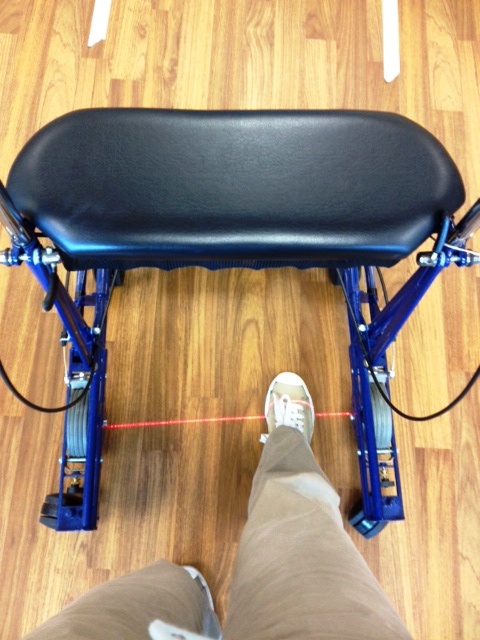
 Leave the ego at home. Fortunately, we now have so many tools at our disposal, please make use of them this includes folding canes with height adjustment, wheelchairs, laser canes, disposable undergarments, you name it. Don’t pay any heed to those staring who do not understand what we have to go through.laser-cane-parkinsons_tProduct DetailsU step walker with laser for foot placement

 Don’t underestimate the importance of a good travel companion especially if venturing out of comfort zone or internationally. A good friend or companion can Tips for traveling with friends... and staying friends.be a god send when you need an extra pair of legs or hands. Trust me, when I suddenly freeze because my back gives out from the rigidity of my axial muscles it is nice to have a plan ahead and a person to lean on to help walk with me to prevent falling and to retrieve my luggage is an absolute gift.

 Mentally notice all bathrooms especially when traveling internationally do not pass a good one since these are hard to find. Remember many charge to use the facilities as well as for the toilet paper. So carry your own toilet paper. Also most all older countries like Italy have only one bathroom for both sexes and toilets are really low with no toilet seats so a good companion not only will help to stand guard but can aid you in going to the bathroom.

1. Remember a lot of us have bladder issues so keep a mental note of location in case you have to hustle back but if don’t think can do this that’s what undergarments are for. There is an app to help locate restrooms but beware of international roaming fees.

 ESPECIALLY IF TRAVELING Outside of US or remote areas have your doctor give you prescriptions for Apomorphine in case need it ( make sure you know how to use and what to expect before using- the company now has 24hour hotline to assist),take sleeping pills, muscle relaxants, and pain meds like Vicodin. As well as anti-inflammatories in my experience a Tylenol plus a Motrin go along way for relieving most pain.

 When making reservations try using an agent that has dealt with booking trips for people with disabilities. Always purchase travel insurance best if you buy insurance from third party rather than travel agent or cruise ship. (AIG Travel Guard).

 Consider the climate of country where traveling- if during hot weather consider investing in a cooling vest. Consider Alaska in summer, Europe in fall, and Caribbean in winter.

 I also recommend a cruise, I am not a big fan of being in the middle of the ocean but a nice river cruise may just be what the doctor ordered. Smaller, easier to navigate has all the amenities at your disposal plus if you can tired or fatigued you can just go lay down. Plus, there is a doctor on board!

Don’t Forget to Have fun! In light of the fact that our Parkinson’s is progressive we want to enjoy life while we can so go on that trip you always wanted now rather than later. CARPE DIEM!!!

Bon Voyage!!!

@copyright2014

all rights reserved by Maria De leon MD


Tips to Prevent and Treat Neck Pain Caused by PD & Dystonia: By Dr. De Leon

Tips to Prevent and Treat Neck Pain Caused by PD & Dystonia: By Dr. De Leon.

Tips to Prevent and Treat Neck Pain Caused by PD & Dystonia: By Dr. De Leon

” I got bone spurs that jingle, jangle, jingle.” ~ unknown

Neck pain is an extremely common problem which afflicts all of us who suffer from Parkinson’s disease at one time or another. Also is a frequent source of disability for those who have cervical torticollis, and generalized dystonia independent of etiology.

The cause in both cases is increase axial rigidity (stiffness of any of the skeletal muscles that support the head or trunk). The neck joints are on a pivot which allow for sideways movements while the fact that the head rest on the atlas (named after Greek god “holding the weight of the world”  while sitting in second vertebra called the axis allows for front and back movements. …

From the moment we awake until we go to bed these muscles are constantly being pushed in all directions. It’s no wonder that as we age they begin to deteriorate. Now add a chronic neurodegenerative disease like Parkinson’s or dystonia independent of cause and we are bound to have pain as our head and neck muscles are trying hard to compensate for abnormal posturing all throughout the day.

Pain is believed to occur in 30-50% (can go up to 85% when all causes of pain are taken into account) of all patients with PD. Although extremely common, pain remains under-recognized as being one of the non- motor symptoms of PD.  The important thing to remember is that pain can appear any time in the course of the disease and even be the presenting symptoms of Parkinson’s, as it was for me.

Predisposing factors for pain in Parkinson’s are:

  • Agedys
  • Gender- more common in women
  • Duration of disease- worst as Parkinson’s disease advances due to increased rigidity of neck; but also to wearing “off” causing dystonia’s and motor fluctuations causing dyskinesia’s.

Pain is frequently under treated in the settings of both PD and dystonia but even more so in the Parkinson’s population, this is why I felt the need to talk about it today.

Although, pain in dystonia is more frequently accepted and recognized by MDS other physicians are not as attuned to this problem. Therefore, cervical pain in dystonia is still poorly managed and treated; even though 75% of patients with dystonia complain of some type of pain with 7/10 sufferers rate their pain moderate to severe. In fact when cervical dystonia sufferers were compared to PD patients in QOL (quality of life) they scored just as poorly. Yet, these patients scored lower in physical limitations than PD despite having higher physical function scores.

So, we have a whole population of over 1.5 million people living in pain and unable to get on with their lives and at times not even be able to do basic daily activities of living. This in my opinion is simply unacceptable and we have to be more proactive in our care advocating for better treatment. This entails going to the doctor as soon as pain begins and not wait so cause can be found and appropriate treatment instituted.

Poorly controlled PD & dystonia symptoms as well as over medication in PD patients is the number one cause for cervical pain in my experience often leading to severe spondylosis (narrowing of canal) and herniated discs of the neck.

Cervical Dystonia more common:xray of anterocollis

  • In women
  • In the US 30/100,000> Europe 1-2/100,000
  • Ethnicity- Jewish Ashkenazi

The key to successful treatment of neck pain in both groups is rapid diagnosis along with immediate, effective treatment to prevent acute pain from becoming chronic and affecting a person’s day to day living.

The reason for advocating rapid effective treatment is to prevent brain changes from setting in; with chronic pain the chemical composition of the brain alters as well as it remaps itself after experiencing prolonged pain.  The pain center in the brain moves and expands out of the usual sensory centers (parietal lobe) to encompass areas of memory, and emotion causing people to become irritable, quick-tempered, and impatient. This is because chronic pain increases the threshold of our ability to focus (trouble multi-tasking) on every day activities. This transformation  occurs because the brain’s area responsible for processing emotion begin to deteriorate at a faster pace than normal. We then expand so much energy trying to deal with pain that even a minor incident like being caught in traffic for 5 minutes can set us off!

This in turn can lead people to go in search of solitude manifesting as isolation creating a vicious cycle of depression, hopelessness and pain intensification.
Many years of experience have shown me that  the best way to combat pain is to bombard it with whatever necessary to halt the process before it becomes an insidious recurring problem.

This is the one exception to the rule of more is not always better!

Unlike other symptoms of PD where we don’t want to just keep adding medications, in pain particularly those caused by nervous system e.g. radicular pain has to be stopped before the spine and brain have a chance to rewire itself?

Cervical pain treatment:

  1. The first thing is prevention! it is always easier to prevent than try to fix a problem.
  2. Second, treat acute pain still easier to treat with less disturbance of a person’s QOL.
  3. Third, treat chronic pain appropriately to break cycle.

Effective interdisciplinary treatment is necessary to efficiently reduce pain in our lives. This includes :

  1. physical therapy
  2. occupational therapy
  3. acupuncture
  4. massage therapy
  5. Botox (dysport, myobloc)
  6. exercise
  7. balanced diet
  8. sleep regimen
  9. adjust dopamine medications
  10. Bio-feedback/counseling
  11. DBS
  12. Neck surgeries when necessary or as last resort-e.g. laminectomies
  13. prescription pain medications :
  • anti-seizure-e.g. Neurontin, Topamax, Tegretol, Keppra;
  • anti-depression-e.g. Elavil, Cymbalta, Effexor;
  • anti-anxiety-e.g. Klonopin;
  • muscle relaxants-e.g. baclofen, dantrolene, zanaflex, relafen;
  • topical anesthetics-e.g. Lidoderm patches, Flector patches;
  • injection- e.g. steroids and Toradol or invasive epidurals, nerve block baclofen pump, Medtronic’s spinal cord stimulator (Neurostimulation);
  • anti-inflammatories-e.g. Celebrex, Mobic, ultram, ultracet; and occasional narcotics -e.g. vicodin, hydrocodone (as acute treatment or short course to break cycle in chronic pain -do not recommend long term use because will worsen symptoms of PD and interfere with medications used for treatment of both PD & dystonia; should not be necessary in most cases if above followed properly)

sources:

hthttp://www.ipcaz.org/long-term-effects-untreated-chronic-pain/tp://www.sciencedirect.com/science/article/pii/S1353802012004427